
آلة تقطيع الكاجو الأوتوماتيكية
خطوط تقطيع متكاملة: قواطع متعددة · غربال اهتزازي · جهاز طرد مركزي · منفاخ · نظام آلي للغرف والتقشير
تدمج آلة تقطيع الكاجو الأوتوماتيكية رؤوس تقطيع متعددة مع غربال اهتزازي، وجهاز طرد مركزي، ومنفاخ هواء، وفاصل أسطواني في خط إنتاج واحد مؤتمت بالكامل، حيث تقوم بتقطيع الكاجو الخام، وفصل اللب عن القشرة، وإعادة توجيه حبات الكاجو غير المقطعة وغير المقشرة لإعادة معالجتها، وتوصيل اللب النظيف إلى المرحلة التالية بأقل قدر من العمالة. تقوم شركة OUTTURN بتصميم وتصنيع خطوط التقطيع الأوتوماتيكية الكاملة من مصنعها في بينه فوك، فيتنام.
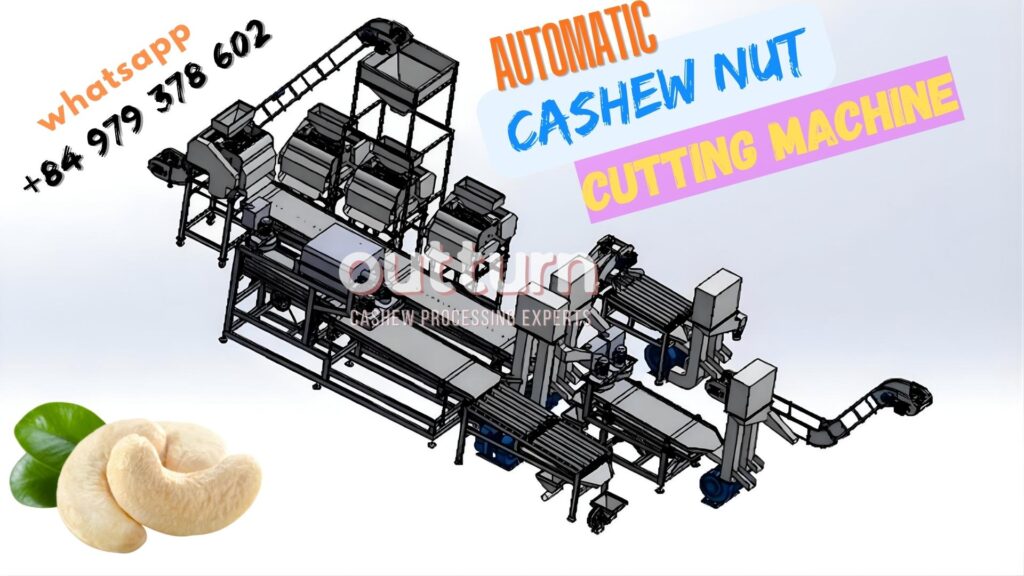
ما هي آلة تقطيع الكاجو الأوتوماتيكية؟
تقوم آلة تقطيع الكاجو المستقلة بمهمة واحدة: تقطيع قشرة حبة الكاجو النيئة. يقوم عامل واحد بتغذية الآلة بالكاجو، فتقوم الآلة بتقسيم القشرة، ويسقط الناتج - وهو عبارة عن خليط من القشرة المفتوحة، واللب، والكاجو غير المقطّع، وقطع القشرة - في حاوية للفرز اليدوي. هكذا تعمل معظم العمليات الصغيرة.
آلة تقطيع الكاجو الأوتوماتيكية تختلف اختلافًا جذريًا. إنها خط إنتاج متكامل، حيث تمثل آلة التقطيع المرحلة الأولى فقط. كل ما يخرج من آلة التقطيع - من حبات وقشور وجوز غير مقطع وجوز نصف مقطع وشظايا قشور - يُعالج تلقائيًا بواسطة المعدات اللاحقة: المنخل الاهتزازي، وجهاز الطرد المركزي، ومنفاخ الهواء، وفاصل الأسطوانات، ورافعة الدلو. لا حاجة للفرز اليدوي بين التقطيع ومجفف الصواني. تتم جميع مراحل الإنتاج، من إدخال الجوز الخام إلى إخراج الحبات النظيفة، من لوحة تحكم واحدة بواسطة عاملين اثنين في كل وردية، بغض النظر عما إذا كان الخط يعالج 300 كجم/ساعة أو 1500 كجم/ساعة.
نمط مباراة فيتنام ضد الهند: في فيتنام، تكاد آلات التقطيع المستقلة تكون معدومة الاستخدام في عمليات التصنيع التجارية، إذ تعمل جميع آلات التقطيع كجزء من خط إنتاج آلي متكامل. أما في الهند، فقد اعتمدت الصناعة تاريخياً على التجميع والفرز اليدوي بين المراحل، لكنها الآن تتحول بسرعة إلى خطوط إنتاج آلية متكاملة، يتم استيراد العديد منها مباشرة من مصنعين فيتناميين، بما في ذلك شركة OUTTURN.
لماذا تختلف المصطلحات: التقطيع مقابل التقشير مقابل الاستخراج
تستخدم صناعة الكاجو مصطلحات متداخلة، لا سيما بين تقاليد المعالجة الهندية والفيتنامية. يُعد فهم هذه المصطلحات أمرًا أساسيًا لشراء المعدات المناسبة وتحديد خط الإنتاج الأمثل.
| شرط | ماذا يعني ذلك | مكان الاستخدام |
| قص | عملية شق القشرة بشفرة لكشف اللب - الحركة الميكانيكية الأساسية | فيتنام، أفريقيا، التجارة الدولية |
| تقشير / إزالة القشرة | فصل النواة عن الغلاف بعد القطع - نتيجة الاستخراج الكاملة | الهند، دوليًا |
| الاستكشاف | يُطلق على هذه العملية في الصناعة الهندية مصطلح "استخراج اللب من القشرة المفتوحة". وتقوم آلة الاستخراج بأتمتة ما كان يُنجز يدويًا باستخدام شفرة صغيرة منحنية. | الهند في المقام الأول - أصبح هذا هو المعيار في جميع أنحاء أفريقيا |
| مكسرات غير مقشرة | المكسرات التي تم قطع قشرتها ولكن اللب لم ينفصل بشكل نظيف وبقي مغمورًا جزئيًا أو كليًا في نصفي القشرة | عالمي - جميع خطوط المعالجة تنتج بعضًا منه |
| مكسرات غير مقطعة | المكسرات التي مرت عبر القاطع دون أن تلامسها الشفرة - إما أن فجوة الشفرة واسعة جدًا أو أن الصامولة صغيرة جدًا بالنسبة للمعايرة. القشرة سليمة واللب لم يمس. | عالمي - تعتمد الكمية على جودة المعايرة |
مبدأ تصميم OUTTURN: تتعامل جميع خطوط الإنتاج الأوتوماتيكية من OUTTURN مع جميع تدفقات الإخراج الأربعة - الحبوب الكاملة، والقشور، والمكسرات غير المقشرة، والمكسرات غير المقطعة - دون تدخل يدوي. لا يخرج من الآلة أي شيء يتطلب فرزًا يدويًا قبل وصوله إلى مجفف الصواني أو حلقة إعادة التدوير.
مكونات خط تقطيع الكاجو الأوتوماتيكي
يتألف خط القطع الآلي الكامل من OUTTURN من المكونات التالية، حيث يؤدي كل منها وظيفة محددة في تسلسل تدفق المواد. ويتم تحديد حجم التكوين - عدد القواطع، وعدد طبقات الغربلة - بما يتناسب مع معدل الإنتاج المستهدف.
1. خزان تغذية RCN وناقل التغذية
خزان التغذية عبارة عن قادوس يحتوي على حبات الكاجو النيئة المطهوة على البخار والمُجهزة للتقطيع. يقوم الخزان بتغذية الكاجو باستمرار إلى الناقل الذي يوزعها على رؤوس التقطيع. يتم التحكم في معدل التغذية ليتناسب مع القدرة الإجمالية للتقطيع في خط الإنتاج، مما يمنع نقص التغذية (تشغيل رؤوس التقطيع فارغة) أو زيادة التغذية (تراكم حبات الكاجو عند الشفرة).
- السعة: عادةً ما تتراوح سعة التخزين بين 100 و300 كيلوغرام حسب حجم الخط
- آلية التغذية: تغذية بالجاذبية مع بوابة قابلة للتعديل أو سير ناقل آلي
- المادة: فولاذ مقاوم للصدأ صالح للاستخدام مع الطعام
- التحكم: مدمج مع لوحة التحكم الرئيسية للخط - معدل التغذية قابل للتعديل دون إيقاف الخط
متطلبات التشغيل عبر البث المباشر: يجب تبخير المكسرات لمدة ١٠-١٥ دقيقة وتركها ترتاح لمدة ١٥-١٨ ساعة قبل إدخالها إلى خزان التغذية. يُليّن التبخير القشرة، بينما يجعلها تركها ترتاح هشة. يجب أن تكون كلتا الحالتين صحيحتين قبل التقطيع. لا يمكن لخط الإنتاج الخارجي أن يُعوّض عن عدم كفاية التبخير أو عدم ترك المكسرات ترتاح بشكل صحيح - فالمعالجة المسبقة الصحيحة هي أساس الحصول على نسبة عالية من المكسرات.
2. رؤوس القطع - آلات متعددة في خط واحد
تُعدّ رؤوس القطع جوهر خط الإنتاج. في خط الإنتاج الآلي، تعمل عدة آلات قطع OUTTURN بالتوازي، حيث تتغذى من نظام تغذية واحد وتُفرغ في نفس المنخل النهائي. يختلف هذا اختلافًا جوهريًا عن تشغيل آلات مستقلة في مواقع منفصلة؛ ففي خط الإنتاج، تكون آلات القطع متزامنة ومتوازنة ومتكاملة.
كيفية تكوين عدة قواطع في خط واحد
يستخدم خط الإنتاج الآلي القياسي في فيتنام أربع آلات تقطيع لكل خط. هذا العدد ليس عشوائيًا، بل يعكس التوازن بين إنتاجية آلات التقطيع، وسعة الغربال، وسهولة الإدارة من لوحة تحكم واحدة. أكثر التكوينات شيوعًا هي:
| تكوين الخط | عدد القواطع لكل خط | عدد الرؤوس لكل قاطع | نوع المنخل | معدل نقل البيانات (مدخلات RCN) |
| مدخل / صغير | 1 | 8 أو 10 رؤوس | منخل واحد | 250-350 كجم/ساعة |
| معيار | 2-3 | 8 أو 10 رؤوس | منخل واحد | 500-1000 كجم/ساعة |
| واسطة | 4 | 8 أو 10 رؤوس | منخل مزدوج | 1000-1200 كجم/ساعة |
| كبير | 4 | 10 أو 12 رأسًا | منخل ثلاثي | 1200-1500 كجم/ساعة |
| حجم كبير | خطوط متعددة | 10-12 رأسًا | منخل ثلاثي لكل خط | 2000–4000+ كجم/ساعة |
تُعالج كل آلة قطع في خط الإنتاج درجة واحدة من أحجام الصواميل. ولأن نظام RCN يُفرز حسب الحجم قبل مرحلة القطع، فإن صواميل الدرجة A تُنقل إلى آلات مُعايرة لهذه الدرجة، وصواميل الدرجة B إلى آلات مُعايرة لهذه الدرجة، وهكذا. ويُطبق خط الإنتاج الآلي نفس مبدأ الفصل بين الدرجات كما هو الحال في الآلات المستقلة، حيث يقوم ببساطة بأتمتة عملية فصل المنتجات في المراحل اللاحقة.
لماذا يُعدّ استخدام 4 شفرات هو التكوين القياسي؟
أصبح استخدام أربع آلات تقطيع لكل خط غربلة معيارًا صناعيًا في فيتنام لأسباب عملية. تقطع آلة OUTTURN الواحدة ذات العشرة رؤوس ما يقارب 250-300 كجم/ساعة. وتنتج أربع آلات معًا ما بين 1000 و1200 كجم/ساعة، وهو ما يتوافق مع معدل الإنتاج المُقدّر لغربال اهتزازي مزدوج الطبقات - وهو التكوين الأكثر كفاءة لفصل الحبوب. يؤدي استخدام عدد أقل من آلات التقطيع إلى عدم استغلال الغربال بالشكل الأمثل، بينما يؤدي استخدام عدد أكبر منها إلى إرهاقه والتأثير سلبًا على جودة الفصل.
تصميم خط المنعطف الخارجي: تواصل مع شركة OUTTURN وأخبرنا بحجم إنتاجك اليومي من الحبوب (RCN) وعدد ساعات العمل. سنقوم بحساب العدد الأمثل للآلات لكل خط إنتاج، وتكوين المناخل المناسب، والتوزيع الأمثل للدرجات بين الآلات بما يتناسب مع مزيجك الأصلي. مباشرة من مصنعنا في بينه فوك، فيتنام.
3. المنخل الاهتزازي - فصل تلقائي للحبوب والقشرة
يُعد المنخل الاهتزازي العمود الفقري لعملية الفصل في خط الإنتاج الآلي. تسقط جميع نواتج آلات التقطيع - الحبوب، أنصاف القشور، شظايا القشور، المكسرات غير المقطعة، المكسرات غير المستخرجة، والشوائب الملوثة بسائل قشرة الكاجو - على المنخل الاهتزازي حيث تحدث المرحلة الأولى من الفصل.
كيف يعمل المنخل الاهتزازي
المنخل عبارة عن سطح مثقب مسطح أو مائل قليلاً يهتز بتردد عالٍ. صُممت فتحات الشبكة بحيث تسقط حبات الكاجو وقطع القشرة الصغيرة من خلالها، بينما تمر أنصاف القشرة الكاملة والمكسرات غير المقشرة والمكسرات غير المقطعة فوقها وتُفرغ في فاصل الأسطوانات. يحافظ الاهتزاز على حركة المواد باستمرار، فلا حاجة إلى الكشط أو التقليب اليدوي.
- مادة السطح: فولاذ مقاوم للصدأ مثقب أو شبكة سلكية مشدودة - صالحة للاستخدام مع الطعام بالكامل
- فتحة الشبكة: مصممة خصيصًا لأصل ونوع الجوز الذي تتم معالجته
- تردد الاهتزاز: قابل للتعديل للتحكم في وقت الإقامة وكفاءة الفصل
- الناتج أسفل سطح السفينة: نوى + شظايا صغيرة من القشرة — يتم نقلها إلى جهاز الطرد المركزي والمنفاخ
- الناتج على سطح الجهاز: أنصاف قشور الجوز، والجوز غير المفرغ، والجوز غير المقطوع - انتقل إلى فاصل الأسطوانات
المناخل ذات الطبقة الواحدة، والطبقتين، والثلاث طبقات - ما معنى الاختلاف
يُحدد عدد طبقات الغربال بشكل مباشر كفاءة الفصل ونظافة تيار الحبوب. كل طبقة إضافية تُعالج مرحلة فصل كانت تتطلب تدخلاً يدوياً لولاها.
| نوع المنخل | ما يفصل | الأفضل لـ | القواطع المدعومة |
| طابق واحد | فصل النواة عن القشرة في المرحلة الأولى. الأمر بسيط. قد تمر بعض قطع القشرة الكبيرة مع النواة. | خطوط إنتاج للمبتدئين، مصانع صغيرة، إعداد يراعي الميزانية | 1-3 قواطع |
| طابقين | الطبقة الأولى: يتم فصل أنصاف الأصداف الكبيرة، ثم تمر الحبوب والشوائب الدقيقة. الطبقة الثانية: تصنيف إضافي لحجم الحبوب، وإزالة غبار الأصداف الناعم. | خطوط الإنتاج التجارية القياسية، ومعظم مصانع المعالجة الأفريقية والآسيوية | 3-4 قواطع |
| ثلاثة طوابق | فصل ثلاثي المراحل: قشور خشنة، وبقايا متوسطة، وغبار ناعم - يتم التعامل مع كل منها على حدة. أنقى ناتج من الحبوب مقارنةً بجميع التكوينات الأخرى. | مرافق تصدير ذات حجم كبير، عندما تكون جودة مدخلات مجفف الصواني أمرًا بالغ الأهمية | 4+ قواطع |
المبدأ الصناعي السائد: زيادة عدد طبقات الغربال تعني تقليل التنظيف اليدوي لحبوب الذرة بعد الغربلة. ينتج عن الغربال ثلاثي الطبقات ذو الأربع شفرات حبوب ذرة تتطلب الحد الأدنى من الفرز الإضافي قبل التجفيف، مما يقلل بشكل كبير من العمالة المطلوبة في المراحل اللاحقة.
خطر التلوث بسائل قشرة الكاجو: تحتوي قشرة حبة الكاجو النيئة على سائل قشرة الكاجو (CNSL)، وهو مادة مهيجة قوية تسبب حروقًا جلدية شديدة. عند قطع القشرة، ينطلق سائل قشرة الكاجو. إذا بقيت شظايا القشرة مختلطة مع اللب بعد مرحلة الغربلة، فقد يُلوث سائل قشرة الكاجو سطح اللب ويُعرّض سلامة الغذاء للخطر. يجب أن يفصل الغربال الاهتزازي القشرة عن اللب بسرعة وبشكل كامل. لهذا السبب، يُعدّ استخدام الفولاذ المقاوم للصدأ المقاوم لسائل قشرة الكاجو وسرعة استخلاص القشرة من المتطلبات الأساسية للتصميم.
4. جهاز الطرد المركزي - إزالة سائل قشرة الكاجو وفصل القشور الدقيقة
بعد الغربلة الاهتزازية، لا يزال تيار اللب يحمل زيت قشرة الكاجو المتبقي من أسطح القشور المقطوعة وشظايا القشور الدقيقة التي لا يمكن لشبكة الغربال التقاطها. تعالج الطرد المركزي هاتين المشكلتين في آن واحد.
كيف يعمل جهاز طرد مركزي للكاجو
جهاز طرد مركزي للكاجو عبارة عن أسطوانة أفقية مزودة بسلة مثقبة تدور بسرعة تتراوح بين 1200 و1500 دورة في الدقيقة. يدخل تيار لب الكاجو إلى الأسطوانة ويدور بسرعة عالية. تُقذف زيت قشرة الكاجو (CNSL) وجزيئات القشرة الرطبة الدقيقة إلى الخارج عبر الثقوب بفعل قوة الطرد المركزي، تاركةً وراءها لبًا أكثر جفافًا ونظافة. يُجمع السائل الخارج على شكل زيت قشرة الكاجو (CNSL)، وهو منتج ثانوي ذو قيمة تجارية عالية يُستخدم في صناعة البوليمرات والراتنجات.
- سرعة الدوران: 1200-1500 دورة في الدقيقة - وهي السرعة القياسية لمعالجة لب الكاجو
- استخلاص سائل قشرة الكاجو: جهاز الطرد المركزي هو نقطة الاستخلاص الرئيسية لسائل قشرة الكاجو في خط الإنتاج الآلي
- فائدة النواة: تخرج النوى من جهاز الطرد المركزي مع كمية أقل من سائل قشرة الكاجو السطحي، ورطوبة أقل على سطح القشرة، وعدد أقل من شظايا القشرة الدقيقة المختلطة بها
- الإنتاجية: عادةً ما تعالج وحدة طرد مركزي واحدة ناتج 2-4 آلات قطع
- المادة: فولاذ مقاوم للصدأ بالكامل — زيت قشرة الكاجو مادة شديدة التآكل للفولاذ الطري
القيمة التجارية لزيت قشرة الكاجو: لا يُعتبر سائل قشرة الكاجو المُستخلص من جهاز الطرد المركزي نفايات، بل يُباع لمصانع المعالجة الكيميائية التي تستخدمه في إنتاج الكاردانول، وراتنجات الفينول، وبطانات الفرامل، والطلاءات المقاومة للتآكل. يستطيع مصنع يُعالج 1000 كيلوغرام/ساعة من سائل قشرة الكاجو استخلاص ما بين 40 و60 لترًا من هذا السائل في الساعة من مرحلة الطرد المركزي وحدها. يُمثل هذا مصدر دخل قابل للاسترداد يُساهم جزئيًا في تغطية تكاليف المعالجة.
5. منفاخ هواء (شفاط هوائي) - مخرج الغلاف
بعد عملية الطرد المركزي، لا تزال المادة تحتوي على خليط من الحبوب وقطع القشور متقاربة في الحجم ولكنها مختلفة في الوزن. يستغل منفاخ الهواء هذا الاختلاف في الوزن لفصلها باستخدام تدفق الهواء - وهو نفس مبدأ تذرية الحبوب، ولكن بدقة صناعية.
كيف يعمل فصل المنفاخ
The kernel-shell mixture is dropped or conveyed through a controlled airstream. Shell pieces — which are hollow, lightweight, and have a كبير surface area relative to their weight — are lifted by the air and carried into a shell collection duct. Dense, compact kernels are too heavy to be lifted and fall through to the kernel collection tray. The air velocity is calibrated to the specific weight difference between the kernels and shells being processed — too fast lifts kernels too; too slow leaves shells in the kernel stream.
- Shell removal efficiency: 95–98% of empty shell pieces removed in a single pass
- Air velocity: adjustable; must be recalibrated when changing nut origin or grade
- Shell output: collected pneumatically and conveyed to shell storage — used as boiler fuel
- Kernel output: falls to final collection tray or conveyor to tray dryer infeed
- Dust: fine CNSL-contaminated dust is captured in a secondary dust collector, not released into the factory air
Half-Cashew Fan — Separate Blower for Split Kernels
Advanced automatic lines include a secondary blower specifically tuned for half-kernel and split kernel separation. Because split kernels have a different aerodynamic profile to whole kernels, a separate fan with different air velocity إعدادات can separate them from the whole kernel stream without manual inspection. This allows the line to produce two kernel streams — whole kernels and splits — simultaneously, each going to separate trays for drying and grading.
6. Roller Separator — Uncut and Unscooped Nut Handling
The roller separator is the most operationally important component that most non-Vietnam processors are unfamiliar with. It handles the two problem outputs that every cutting line produces regardless of calibration quality: uncut nuts and مكسرات غير مقشرة.
Understanding Uncut Nuts vs مكسرات غير مقشرة
| نوع الإخراج | What It Is | السبب الجذري |
| مكسرات غير مقطعة | The shell is completely intact. The blade made no اتصال. The kernel is fully enclosed — untouched by the cutting process. | Blade gap too wide for nut size; nut misaligned in قص cup; D-grade nut too small for current calibration |
| مكسرات غير مقشرة (half-cut) | The shell has been cut but the two halves are not fully separated. The kernel is partially or fully exposed but remains attached to one or both shell halves.’, 3680) | Insufficient shell opening force; shell too thick; steaming time too short; small variation in nut size within grade |
| Un-scooped kernels | The shell halves have separated but the kernel is still physically stuck to the inner shell surface by the testa (inner skin). The kernel needs to be physically extracted. | Kernel is concave and wraps around shell interior contours; under-steaming causes adhesion; a normal occurrence even in well-calibrated lines |
How the Roller Separator Works
The output that rides over the vibration sieve top deck — which contains shell halves, مكسرات غير مقشرة, and uncut nuts — is fed onto the roller separator. The separator consists of a series of parallel cylindrical rollers with a specific gap between them. Shell halves — which are curved, thin, and hollow — fall between the rollers or are oriented by the roll pattern to fall through. Uncut nuts and مكسرات غير مقشرة — which are round and solid — roll along the top of the rollers and are discharged at the far end.
- Shell halves: fall between rollers, discharged to shell collection conveyor
- مكسرات غير مقطعة: roll over rollers, discharged to bucket elevator for return to cutter infeed
- مكسرات غير مقشرة: separated from shells, discharged to mechanical scooper or manual scooping table
Recirculation of مكسرات غير مقطعة
مكسرات غير مقطعة discharged from the roller separator are not discarded — they are returned to the cutting machine via a bucket elevator for a second cutting pass. This recirculation loop is fully automatic in a properly configured OUTTURN line. The bucket elevator lifts the مكسرات غير مقطعة back to the infeed tank level, where they join the main cutting feed. A well-calibrated line achieves a recirculation rate of 5–8% — meaning 5–8% of nuts require a second pass. A poorly calibrated line can reach 15–20% recirculation, indicating a blade gap or size sorting problem that needs correction.
Key metric: Monitor your recirculation rate. If the bucket elevator is visibly full and working hard, your uncut rate is high. The cause is almost always a blade gap calibrated for the wrong grade, or size-sorted nuts that were not separated finely enough before the قص stage.
7. The الاستكشاف Machine — Automatic Kernel Extraction
الاستكشاف is the Indian industry’s term for the process of physically extracting (الاستكشاف out) the cashew kernel from the opened shell halves. In manual processing, a worker uses a small curved metal blade to pry the kernel free from the shell. In an automatic line, the الاستكشاف machine replaces this entirely.
What the الاستكشاف Machine Does
The مكسرات غير مقشرة discharged from the roller separator — those where the shell cut but the kernel did not separate — are fed into the scooping machine. The machine applies a combination of mechanical pressure, oscillation, and impact to free the kernel from its shell adhesion without breaking it. The scooped kernel and the now-empty shell halves are then separated by a secondary sieve and blower within the scooping machine assembly.
- Input: مكسرات غير مقشرة — shell cut, kernel still adhering
- Mechanism: oscillation, vibration, and controlled mechanical impact to release kernel adhesion
- Output stream 1: freed kernels — passed to secondary sieve and blower for shell removal
- Output stream 2: empty shell halves — conveyed to shell collection
- Output stream 3: any remaining unscooped kernels — returned to manual الاستكشاف table
Primary and Secondary الاستكشاف Stages
In high-throughput automatic lines, الاستكشاف is divided into two stages to maximise kernel recovery without breakage:
- Primary separator — first-pass separation of kernels from the bulk of the shell output. Handles the majority of the unscooped stream.
- Primary shell blower — air separation to remove empty shell halves from the kernel output of the primary separator.
- Bucket elevator — lifts remaining unscooped material to the secondary الاستكشاف stage.
- Secondary الاستكشاف machine — applies additional mechanical force to release kernels that the primary stage did not free.
- Secondary separator and blower — final shell removal from the secondary scooped kernel stream.
- Roller-based uncut/unscooped separator — final classification of any remaining مكسرات غير مقطعة, routing them back to the main recirculation loop.
After the full الاستكشاف sequence, any kernels that are still embedded despite two mechanical passes are sent to the manual الاستكشاف table — a small workstation at the end of the line where workers handle only the residual cases that automation could not address. In a well-configured OUTTURN line, this table handles less than 3% of the total kernel volume.
8. Bucket Elevator — The Line’s Vertical Transport System
The bucket elevator is the conveying backbone of the automatic line. It transfers material between stages that are at different heights — specifically, returning uncut nuts from the roller separator (at floor level) back up to the infeed tank (at elevated level), and transferring مكسرات غير مقشرة between the primary and secondary scooping stages.
- Construction: stainless steel buckets on a continuous belt or chain
- Capacity: sized to handle the full recirculation volume of the line
- CNSL resistance: all اتصال surfaces food-grade SS 304 — essential given CNSL اتصال
- Speed: variable to match recirculation rate; controlled from the main panel
- Number of units: a معيار 4-cutter line typically uses 2 bucket elevators
9. Central Control Panel — Single-Point Line Management
All operations of the automatic قص line — cutter speed, sieve vibration frequency, centrifuge RPM, blower air velocity, bucket elevator speed, and infeed rate — are controlled from a single control panel. This is what makes the line truly automatic from an operational standpoint.
- Panel type: PLC (Programmable Logic Controller) with display panel
- Operators required: 2 workers per shift for a 4-cutter, triple-sieve line
- Emergency stop: single button stops all line components simultaneously
- Motor protection: overload protection on all drive motors
- Monitoring: visual indicators for each component’s operational status
Labour reduction benchmark: A manual cutting and الاستكشاف operation handling 1,000 kg/hr of RCN input requires 40–60 workers across cutting, sorting, and الاستكشاف stations. The equivalent OUTTURN automatic line requires 2 operators. The capital investment in the automatic line typically achieves payback within 12–18 months in a West African factory context.
Complete Material Flow — From Raw Nut to Clean Kernel
Understanding the complete material flow is essential for factory layout planning, capacity sizing, and troubleshooting. The following sequence traces every output stream from RCN infeed to tray dryer input:
STEP 1 RCN Infeed — Steamed and rested raw cashew nuts (sorted by grade) loaded into the infeed tank. Feed rate set to match cutter capacity.
STEP 2 قص — Nuts distributed across 4 cutting machines (or configured number). Each machine splits the shell along its natural seam. Output: open-shell nuts, مكسرات غير مقطعة, shell fragments, liberated kernels.
STEP 3 Vibration Sieve — First Separation — All cutter output onto the vibration sieve. Through deck: kernels + fine debris. Over deck: shell halves + مكسرات غير مقشرة + uncut nuts.
STEP 4 Centrifuge — Kernel stream (from under the sieve) spun at 1,200+ RPM. CNSL oil and fine shell particles expelled. Output: cleaner, drier kernels. CNSL collected as by-product.
STEP 5 Air Blower — Shell Winnowing — Centrifuged kernel stream passed through calibrated airstream. Lightweight empty shell pieces lifted and removed. Heavy kernels fall through. Shell fragments pneumatically conveyed to shell storage.
STEP 6 Roller Separator — Uncut / Unscooped Classification — Over-sieve material (shells + unscooped + uncut) passes over roller array. Shell halves fall between rollers. Solid nuts (uncut + unscooped) roll over top and discharge separately.
STEP 7 Recirculation Loop — مكسرات غير مقطعة — مكسرات غير مقطعة lifted by bucket elevator back to infeed tank for second cutting pass. Monitored continuously — high recirculation rate signals calibration issue.
STEP 8 Primary الاستكشاف — مكسرات غير مقشرة (shell cut, kernel adhering) fed to scooping machine. Oscillation and mechanical action frees kernel from shell adhesion. Most kernels liberated here.
STEP 9 Secondary Sieve + Blower — Post-الاستكشاف Separation — Scooped kernel stream separated from empty shells by sieve and secondary blower. Shells to shell storage. Kernels join main kernel stream.
STEP 10 Secondary الاستكشاف Stage — Remaining unscooped material (bucket elevator from primary stage) processed through secondary scooper and separator for maximum kernel recovery.
STEP 11 Manual الاستكشاف Table — Any kernels still embedded after two mechanical الاستكشاف passes sent to manual table. Target: less than 3% of total kernel volume. Workers at this table are the only manual intervention in the process.
STEP 12 Clean Kernel Output — Tray Dryer Infeed — Combined kernel streams from blower, centrifuge, and الاستكشاف stages collected at the tray dryer infeed. Kernels enter the dryer as a clean, shell-free stream ready for testa drying.
الناتج Cutting Machines — Configured for Automatic Lines
Every الناتج cutting machine is designed to operate both as a standalone unit and as a component in an automatic cutting line. The same machine that a small processor uses as a single standalone cutter is the same machine that a large factory integrates into a 4-cutter automatic line. There is no separate ‘automatic line machine’ — the integration hardware (infeed conveyor connection, discharge chute to sieve) is configured at installation.
| Model | Heads | Throughput/hr | Power | SKU | Best Line Role |
| 2-Head | 2 | 60–100 kg | 0.75 kW | CCM.2.الناتج.26 | D-grade dedicated stream in كبير lines; entry-level standalone |
| 4-Head | 4 | 120–200 kg | 0.75 kW | CCM.4.الناتج.26 | A-grade or A+ stream; standalone single-cutter line |
| 6-Head | 6 | 150–250 kg | 0.75 kW | CCM.6.الناتج.26 | B-grade stream; 2-cutter lines |
| 8-Head | 8 | 200–280 kg | 0.75 kW | CCM.8.الناتج.26 | معيار 4-cutter line component; most common |
| 10-Head | 10 | 250–300 kg | 0.75 kW | CCM.10.الناتج.26 | 4-cutter line at 1000-1200 كجم/ساعة total; high-volume lines |
| 12-Head | 12 | 300–350 kg | 0.75 kW | CCM.12.الناتج.26 | Maximum throughput per machine; كبير 4-cutter lines up to 1,400 kg/hr |
All models: horizontal rotary cutting mechanism, 3-phase motor, CNSL-resistant stainless steel construction, adjustable blade gap, معيار blade change under 5 minutes, price range USD $2,000–$5,000 FOB Vietnam.
Power advantage: Every الناتج cutting machine uses exactly 0.75 kW (1 HP) regardless of head count — from 2-head to 12-head. A 4-machine automatic line uses just 3 kW total for all cutters. The vibration sieve, centrifuge, blower, and bucket elevators add approximately 4–6 kW. Total automatic line power consumption: 7–9 kW for a 1,000 kg/hr line. This makes الناتج lines highly compatible with solar power and generator supply in remote African processing locations.
Choosing the Right Automatic Line Configuration
The right configuration depends on four factors: daily RCN volume, shift hours, origin (which determines D-grade fraction and size profile), and budget. The following guide covers the most common scenarios:
For 500–800 kg/hr Target Throughput
- Configuration: 2–3 OUTTURN 8-head or 10-head machines + single or منخل مزدوج + 1 centrifuge + 1 blower
- Workers: 2 per shift
- Suitable for: واسطة factories, 1–2 shift operations, mixed West African origins
- Daily output (2 shifts): approximately 4–6 tonnes RCN processed
For 1000-1200 كجم/ساعة Target Throughput — The Standard Line
- Configuration: 4 x OUTTURN 8-head or 10-head machines + منخل مزدوج + 2 centrifuges + 2 blowers + 2 bucket elevators + roller separator + scooping machine
- Workers: 2 per shift
- Suitable for: commercial-scale processing, 2-shift operations, any African or Asian origin
- Daily output (2 shifts): 8–10 tonnes RCN processed
- This is the reference configuration for most الناتج complete line orders
For 1200-1500 كجم/ساعة Target Throughput
- Configuration: 4 x OUTTURN 12-head machines + منخل ثلاثي + 2–3 centrifuges + blowers + full recirculation loop
- Workers: 2-3 per shift
- Suitable for: large commercial processors, 3-shift operations, حجم كبير export factories
- Daily output (3 shifts): 15– 18 tonnes RCN processed
Multi-Line Scaling
Factories processing above 2,000 kg/hr typically operate multiple parallel lines rather than a single large line. Two 1,000 kg/hr lines are preferable to one 2,000 kg/hr line because they offer redundancy — if one line is down for maintenance, the factory continues at 50% rather than 0% output. الناتج supplies complete multi-line factories with a single factory-direct contract from Binh Phuoc.
Whole Kernel Recovery in Automatic Lines vs Standalone Cutters
A common question from processors upgrading from standalone to automatic: does the automatic line improve WKR, or does it just reduce labour? The answer is both — but they work through different mechanisms.
| WKR Factor | Standalone Cutter | Automatic Line (الناتج) |
| Kernel handling after قص | Manual الاستكشاف — frequent kernel contact, variable technique, breakage from rough handling | Automated — centrifuge and blower handle kernels with no manual اتصال until tray dryer |
| Shell contamination of kernels | Manual sorting misses fine shell fragments; CNSL contamination from shell اتصال | Centrifuge + blower removes shell and CNSL residue systematically |
| Uncut nut handling | Manual re-feed — delayed, inconsistent, often skipped when production pressure is high | Automatic recirculation — every uncut nut returns to the cutter immediately and consistently |
| Unscooped nut recovery | Depends entirely on worker skill and attention — highly variable | Mechanical الاستكشاف with two stages recovers the vast majority automatically |
| Typical WKR achieved | 62–70% depending on worker skill and origin | 72–77% on same origin — automatic handling eliminates most breakage sources |
The 5–10% WKR improvement from automatic to manual is primarily driven by three factors: elimination of rough manual kernel handling, systematic recirculation of every uncut nut (not just those workers remember to re-feed), and complete CNSL removal by the centrifuge. The financial impact is significant.
Financial illustration: A factory processing 5,000 kg/hr RCN at 22% kernel recovery achieving 72% WKR vs 65% WKR: the automatic line produces an extra 0.07 × 0.22 × 5,000 = 77 kg of whole kernel per hour. At $3.50/kg kernel and 16 operating hours/day, that is $4,312 additional revenue per day — or over USD $1 million per year from the WKR improvement alone, before counting the labour saving.
Frequently Asked Questions – آلة تقطيع الكاجو الأوتوماتيكية
Get a Complete Line Specification — Factory Direct from Vietnam
الناتج designs and manufactures complete automatic cashew cutting lines from our factory in Binh Phuoc, Vietnam — the heart of the world’s cashew processing industry. Every line is built to your daily volume, origin mix, and shift configuration. We supply:
- Complete automatic lines — all components, single factory-direct contract
- Individual الناتج cutting machines — 2-head through 12-head, USD $2,000–$5,000 FOB Vietnam
- Spare parts — all blade configurations, bearings, belts, available from stock
- Technical يدعم — line design consultation, installation guidance, calibration advice