
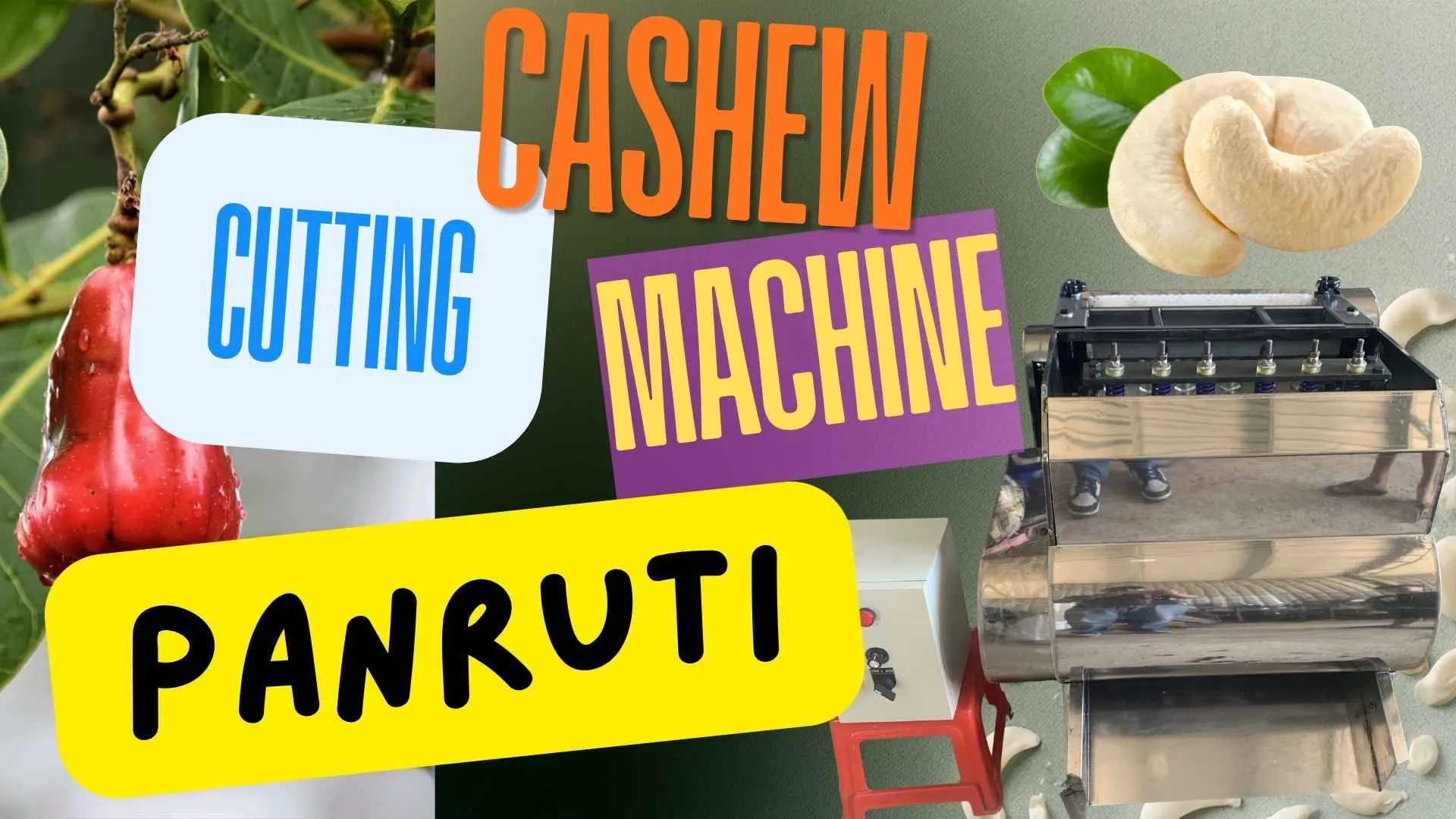
Panruti, a town in Cuddalore district, Tamil Nadu, is one of India’s most recognized names in cashew processing. For generations, the area has built its identity around cashew — first as a growing region, and over time as a hub where raw nuts from the surrounding countryside and beyond are steamed, cut, and graded into kernels for the domestic and export trade. Ask anyone in South India’s cashew business about Panruti and the association is immediate: this is a processing town, not just a farming one.
A cottage industry that grew up
Panruti’s processing tradition has deep roots in manual, cottage-scale work. For decades, hand-cutting was the norm — small household and workshop-level operations employing local labor, often women, with skills passed down within families and communities. That hand-cutting culture is part of what gave Panruti-processed kernels their reputation: careful, experienced grading that mechanized lines elsewhere struggled to match in the early days of the industry.
Over time, as demand grew and labor economics shifted, that cottage base gradually absorbed mechanization at the margins. Semi-mechanized cutting equipment started appearing alongside manual boards in many units, not as a wholesale replacement but as a way to lift throughput on the more repetitive part of the process while keeping the grading and finishing work that experienced hands do best. This gradual, blended evolution — rather than a sudden jump to full automation — is fairly typical of how mid-sized Indian processing towns have modernized.
The situation today
Panruti today has a mix of scales: small household and workshop units still running largely manual operations sit alongside somewhat larger processing sheds that have invested in mechanized cutting to handle higher daily volumes. Few of these are large industrial-scale factories in the way some newer processing hubs elsewhere in India or abroad have built out; the town’s strength has generally been in its density of smaller, experienced operators rather than a handful of very large plants. That structure means demand for cutting equipment here tends to run toward machines that are affordable to acquire, straightforward to operate with existing labor, and easy to keep running without a large in-house technical team.
Why cutting-machine choice matters in Panruti
For an operator running a smaller unit, the calculus around a cutting machine is different from a large export-oriented facility. Capital outlay matters more relative to revenue, so a machine needs to earn its cost quickly rather than sit as a long-term automation bet. Downtime is also costlier in relative terms for a small unit with a single line — a machine that’s simple to maintain and quick to get spare parts for keeps a modest-sized operation from losing days of output over a worn blade or cup. And because feedstock in Panruti often blends locally grown RCN with nuts sourced from other regions, a cutting machine that handles some variation in nut size without constant readjustment is more practical than one tuned narrowly to a single, uniform lot.
Where OUTTURN’s factory-direct model fits
OUTTURN manufactures its cutting machines factory-direct out of Bình Phước, Vietnam, which puts entry-level and mid-scale equipment within reach of smaller processing units without the markup that comes from layered distributors. For an operator in Panruti stepping up from fully manual cutting or replacing aging equipment, a compact 2-head or 4-head machine offers a manageable entry point in cost and footprint, while still lifting output above what hand-cutting alone can sustain. Because OUTTURN also stocks and ships spare parts directly, smaller units aren’t left waiting on long import chains to keep a single machine running — a real concern for an operation that may not have a backup line to fall back on.
Next steps
If you run a processing unit in or around Panruti, start by estimating your current daily hand-cut volume and where you’d like it to land with mechanized cutting assistance. From there, contact OUTTURN with your target head count and typical RCN size range so we can recommend a configuration and provide factory-direct pricing, along with details on spare parts support for ongoing operation.